Technical SEO
Structured Data for Ecommerce: A Complete Guide

Structured data is one of the highest-return technical SEO investments for ecommerce, and one of the most commonly botched. Done well, it earns rich results, star ratings, prices and availability shown directly in search, and makes your products legible to every system that reads your site, from traditional search to AI. Done badly, with inaccurate or fabricated markup, it achieves nothing or invites penalties. This is a practical guide to the structured data that matters for ecommerce: which types to use, what each does, and the rules that keep it effective and safe. It assumes you want durable results, so it emphasises accuracy over cleverness throughout.
Quick answer
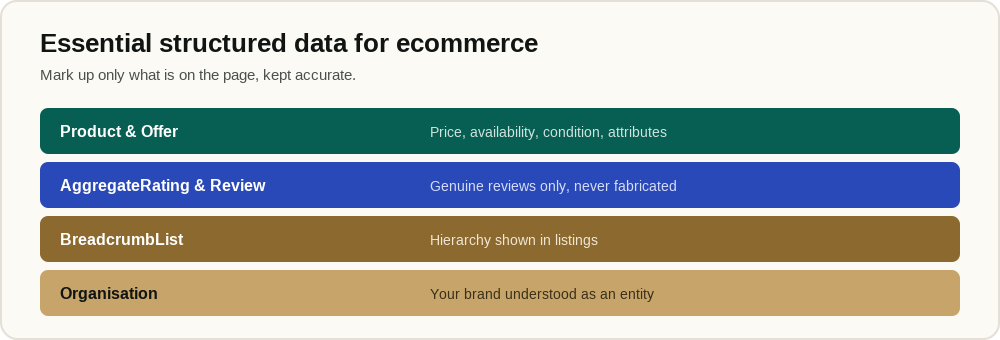
Structured data is standardised markup that tells search engines exactly what your pages contain, so they can show rich results and understand your products precisely. For ecommerce the essentials are Product and Offer (price, availability, condition), AggregateRating and Review, BreadcrumbList, and Organisation. The rules that matter most: mark up only what is genuinely on the page, keep it accurate and current, and never fabricate ratings or reviews. Done right it earns richer search listings and helps every machine that reads your site.
Key takeaways
- Structured data labels your page's content for machines, earning rich results and helping every system, including AI, understand your products.
- The ecommerce essentials: Product and Offer (price, availability, condition), AggregateRating and Review, BreadcrumbList, and Organisation.
- Get Product and Offer accurate and complete first; they state the facts every shopping system needs.
- Mark up only content genuinely on the page, and keep prices, availability and specs synced to live reality.
- Never fabricate or inflate ratings and reviews; it violates guidelines and risks penalties.
- Validate your markup and monitor the rich results you earn to confirm it is working.
The essential types for ecommerce
Product and Offer
Product markup describes the item, name, description, brand, identifiers, images, attributes, and Offer markup describes the commercial terms, price, currency, availability, condition. Together they are the core of ecommerce structured data and the basis for product rich results. Getting Product and Offer accurate and complete is the first priority, because they state the facts every shopping system needs.
AggregateRating and Review
Rating and review markup expresses your products' reviews in machine-readable form and can produce the star ratings that lift click-through in search. It must represent genuine reviews honestly, reflecting real ratings, not invented ones. This is both an effectiveness and a compliance point: fabricated review markup is against guidelines and risks penalties.
BreadcrumbList
Breadcrumb markup describes your page's position in the site hierarchy and can produce breadcrumb trails in search listings, reinforcing your architecture and helping users understand where a page sits. It is simple to add and complements good site structure.
Organisation
Organisation markup describes your business, name, logo, contact details, and helps search engines understand your brand as an entity and connect information about you across the web. This supports the brand understanding that matters for both traditional and AI search.
The rules that keep it working
Mark up only what is on the page
Structured data must describe content genuinely present and visible on the page. Marking up things that are not there, or hiding marked-up content from users, violates guidelines and can trigger penalties. The markup is a faithful label for real content, never a place to make claims the page does not support.
Keep it accurate and current
Prices, availability and specifications change, and your structured data must change with them. Stale markup, a price or stock status that no longer holds, creates bad experiences and undermines trust, and search engines act on the data directly. Automate synchronisation so markup reflects live reality.
Never fabricate ratings or reviews
This deserves its own rule because the temptation is real and the consequences serious. Invented or inflated rating and review markup is dishonest, against guidelines, and a known cause of penalties and lost rich results. Only mark up genuine reviews, honestly represented.
Validate and test
Use validation tools to check your markup is well-formed and eligible for rich results, and monitor which rich results you actually earn. Markup that contains errors or does not match guidelines simply will not produce rich results, so testing is how you confirm the investment is paying off.
FAQ
Frequently asked questions
The essentials are Product and Offer markup (name, price, availability, condition and attributes), AggregateRating and Review markup for genuine reviews, BreadcrumbList for hierarchy, and Organisation markup for your business. Product and Offer are the priority, since they state the core facts every shopping system needs.
Not as a direct ranking boost in most cases, but it earns rich results, enhanced listings showing ratings, prices and availability, that increase click-through, and it helps search and AI systems understand your products precisely. The benefit is better, more prominent listings and clearer machine understanding, which is valuable in its own right.
No. Fabricated or inflated rating and review markup is dishonest, violates search engine guidelines, and is a known cause of penalties and lost rich results. Only mark up genuine reviews, honestly represented. This is one of the clearest lines in structured data, and crossing it is risky and self-defeating.
Search engines act on the data directly, so a stale price or wrong availability creates bad experiences and undermines trust, and markup that does not match the visible page can violate guidelines. Keep prices, availability and specifications synced to live reality, ideally automatically, so the markup is always a faithful label.
Use validation tools to confirm the markup is well-formed and eligible for rich results, ensure it matches the content actually on the page, and monitor which rich results you earn in search. Markup with errors or guideline mismatches simply will not produce rich results, so testing confirms the investment is paying off.
Similar posts
SEO
Ecommerce SEO: The Complete Guide to Growing Organic Revenue
Learn how to grow ecommerce organic revenue with category SEO, product pages, technical SEO, structured data, internal linking, content strategy and measurement.
24 min read

Technical SEO
Structured Data for AI Search: What Actually Helps
Which schema types matter for AI visibility, and which do not. How structured data supports AEO and GEO, the rules for using it well, and where people go wrong.
4 min read
Technical SEO
Structured Data for Agentic Commerce
Structured data tells AI agents what your products are, cost, and whether they can be trusted. Which schema types matter, why accuracy is paramount, and how to keep it synced to reality.
5 min read
Related services