Agentic Commerce
ChatGPT Shopping and In-Chat Checkout

A growing number of shoppers now open an AI assistant instead of a search engine when they begin researching a purchase. They describe what they need in their own words and get a synthesised answer with options and reasoning. Assistants have begun adding features that make this more shopping-oriented, surfacing products and, in some cases, moving the buying step closer to the chat. This is a real shift in how discovery starts, and it deserves a clear-eyed look. This piece separates what is genuinely happening from what is speculative, and sets out how a brand should respond without overinvesting in a channel that is still forming.
Quick answer
People increasingly use ChatGPT and similar assistants to research products, compare options and get recommendations, and some assistants have added shopping features that surface products and, in limited integrations, support buying closer to the conversation. For brands this is a discovery channel to be understood and prepared for, not a solved checkout mechanism. The practical response is to be legible and trustworthy to these systems through clean data, honest content and genuine reputation, and to measure the demand they drive.
Key takeaways
- Assistant-led research and recommendation is well established; people increasingly start product discovery in an AI chat rather than a search box.
- Shopping features and steps towards in-chat buying exist in some assistants but are partial, changeable and vary by region and category.
- When discovery starts in an assistant, brands it understands and trusts get surfaced and others are invisible early in the journey.
- Preparing is an extension of GEO into shopping: clean structured data, consistent information, genuine reputation, and clear factual content.
- Keep your own checkout excellent and avoid expensive bets on any single in-chat checkout integration until it proves stable and material.
- Measure with the imperfect signals available, identifiable referrals, branded demand, customer surveys, plus blended metrics.
What is actually happening
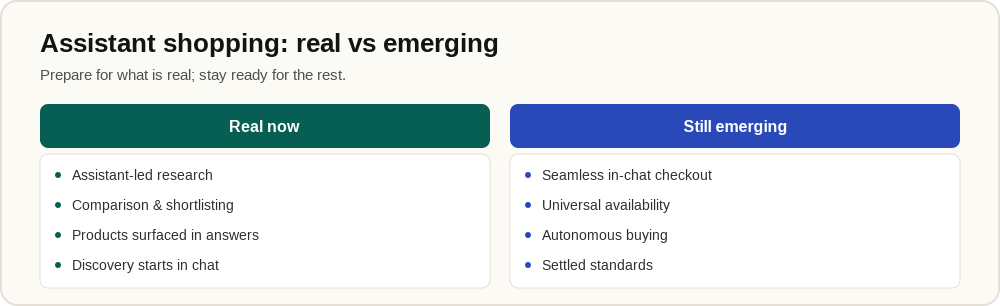
The solid, observable reality is that assistants are now a research and discovery surface. People ask them for recommendations, comparisons and shortlists, and the assistants answer by drawing on their training and, where available, live information, citing or naming products and retailers. For many buyers this replaces the first few searches they used to run.
On top of that, shopping-specific features have appeared in some assistants: richer product surfacing, the ability to show options with details, and, in particular controlled integrations, steps that bring purchasing closer to the conversation. The exact capabilities differ by assistant, change over time, and vary by region and category. The honest summary is that assistant-led research and recommendation is well established, while seamless universal in-chat checkout is partial and evolving.
Why this matters for brands
When discovery starts in an assistant, the brands that get surfaced have an advantage, and the ones the assistant does not know or cannot corroborate are invisible at the very start of the journey. This is the same dynamic as getting cited in AI answers generally, applied to shopping. You are not optimising a page for a human here; you are trying to be a product the system understands clearly and trusts enough to recommend.
That makes assistant shopping an extension of generative engine optimisation into the commercial domain. The levers are familiar: be present in the data these systems read, keep your information consistent and accurate, earn genuine reputation and reviews, and provide the kind of clear, factual content a system can rely on.
How to prepare, realistically
Be legible to the systems
Ensure your products are represented in clean, structured, accurate data and feeds, and that your site is readable by machines. An assistant can only recommend what it can understand. This is the same foundational work that prepares you for agents and AI search broadly.
Earn trust it can verify
Assistants, like careful shoppers, favour options they can corroborate. Consistent information across the web, genuine reviews, clear policies and demonstrated expertise all make you a safer recommendation. Thin or contradictory presence makes you a riskier one the system may avoid.
Do not re-architect your checkout on speculation
Because in-chat checkout capabilities are partial and shifting, resist expensive bets on any single integration before it has proven stable and material for your category. Keep your own checkout excellent, stay informed as capabilities mature, and adopt specific integrations when the evidence justifies them, not before.
Measure what you can
Attribution for assistant-driven shopping is immature. You will rarely get a clean "ChatGPT sent this sale" line. Instead, watch the signals you can see: identifiable referrals from assistant surfaces, growth in branded and direct demand, and what customers say when you ask how they found you. Combine these with blended business metrics rather than waiting for a perfect dashboard that does not yet exist.
FAQ
Frequently asked questions
In some controlled integrations, buying can happen closer to the conversation, but seamless universal in-chat checkout is partial and evolving rather than standard. What is clearly established is that people use assistants to research, compare and get recommendations, which shapes discovery even when the final purchase happens elsewhere.
Make your products legible and trustworthy to these systems: accurate structured data and feeds, consistent information across the web, genuine reviews, clear policies and factual content. This is the same reputation and clarity work that earns citations in AI answers, applied to shopping. You cannot guarantee a recommendation, only make yourself a safe one.
It overlaps with SEO but leans more on being understood and corroborated by AI systems than on ranking a page. It is closer to generative engine optimisation: present in the data these systems read, consistent, reputable and clear, so an assistant can confidently represent and recommend you.
Not on speculation. In-chat checkout capabilities are partial and shifting, so avoid expensive commitments to a single integration before it is proven stable and material for your category. Keep your own checkout excellent and adopt specific integrations when the evidence justifies them.
Imperfectly. Clean attribution for assistant-driven shopping does not fully exist, so watch identifiable assistant referrals, growth in branded and direct demand, and customer survey responses about how they found you, combined with blended business metrics. Treat these as partial proxies rather than a precise count.
Similar posts
Agentic Commerce
The Agentic Commerce Guide: Selling When AI Does the Shopping
A practitioner's guide to agentic commerce: what it is, what is real versus hype, and the no-regret work, structured data, feeds, trust and frictionless buying, that makes a store ready.
7 min read
Agentic Commerce
Perplexity and AI-Assistant Shopping for Brands
Answer engines handle shopping by synthesising information and citing sources, so visibility means being a cited, trusted source. What this rewards, what it resists, and how brands respond.
5 min read
AI Search & GEO
How to Get Your Brand Cited by ChatGPT
How to improve your odds of being cited by ChatGPT: retrievable pages, answer-ready content, consistent branding and real authority. Honest about what you cannot control.
4 min read
Related services