AI Tools
Best AI Tools for SEO: A Practical Guide by Use Case

"Best AI SEO tool" has no single answer, because SEO is many jobs. A keyword researcher, a content strategist and a technical auditor need different things. This guide organises AI SEO tools by the job to be done, names well-known examples in each, and is honest about what still needs a human. Tool names are illustrations of a category, not endorsements; evaluate each against your own workflow and budget.
Quick answer
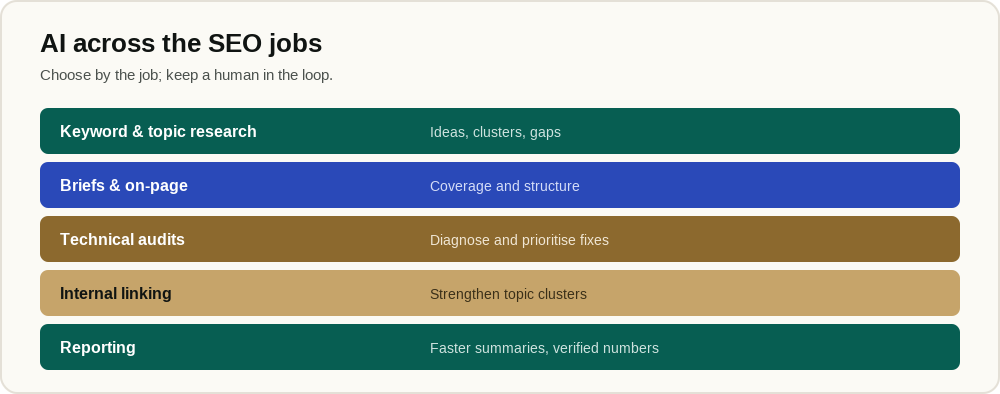
The best AI SEO tool depends on the job: keyword and topic research, content briefs and optimisation, technical audits, internal linking, or reporting. Established SEO platforms now embed AI across these jobs, general assistants handle research and drafting well, and specialist writing tools help with on-page optimisation. Choose by the job you need done and insist on human review, because AI accelerates SEO work but does not replace the judgement that makes content rank and genuinely help readers.
Key takeaways
- There is no single best AI SEO tool; choose by the job to be done.
- Established platforms embed AI across research, audits and linking.
- General assistants handle research and drafting; writing tools guide on-page coverage.
- AI guidance is a floor; genuine expertise and editing are what rank content.
- Verify technical fixes and report numbers before acting on them.
Keyword and topic research
AI speeds up finding topics, clustering keywords and spotting gaps. Established platforms such as Ahrefs and Semrush pair large keyword databases with AI features, while general assistants help brainstorm angles and group intent. The job is a prioritised map of what to create; the human decides what fits the brand and the business.
Content briefs and on-page optimisation
Tools here turn a target query into a brief and guide on-page coverage. Writing-focused tools like Surfer and Clearscope, and general assistants for drafting, support this job. The aim is comprehensive, well-structured content, but AI guidance is a floor, not a ceiling. Add genuine expertise and experience, or you will produce competent, forgettable pages that struggle to rank.
Technical SEO and audits
AI helps summarise crawl data, prioritise fixes and explain issues. Platform crawlers increasingly add AI summaries, and general assistants help interpret logs and configs. The job is faster diagnosis, but verify fixes before shipping, because a confident wrong answer in technical SEO can cause real damage.
Reporting and analysis
AI accelerates pulling data, drafting summaries and surfacing changes worth attention. This saves time on monthly reporting, provided you check the numbers and the narrative before anyone acts on them.
What to look for
- A clear fit with the specific SEO job you need done.
- Integration with tools and data you already use.
- Output good enough to build on with light editing.
- Transparency about data sources and limits.
- Pricing justified by time saved or results gained.
What AI SEO tools will not do
They will not invent genuine expertise, earn trust, or guarantee rankings. Search rewards helpful, credible content from recognisable sources, and that still comes from people. Use AI to work faster and cover more ground, then add the experience and editing that make content worth ranking.
FAQ
Frequently asked questions
No. They accelerate research, drafting, audits and reporting, but ranking still needs human expertise, judgement and editing. Treat AI as a force multiplier, not an autopilot.
Many tasks, research, briefs, drafting, work well with a general assistant. Add a paid platform when you need large keyword data, crawling or rank tracking at scale.
It can, if a human adds genuine expertise, structure and accuracy, and edits heavily. Thin, unedited AI content rarely competes and can harm credibility.
Start with a capable general assistant for research and drafting, plus one established platform for keyword and rank data. Add specialist tools only as needs grow.
Edit heavily, add real expertise and experience, verify facts, and publish only genuinely useful pages. Volume without quality is the main risk.
Similar posts
AI Tools
The AI Marketing Tool Stack (2026): A Practical Buyer's Guide
A practitioner's guide to building an AI marketing tool stack around jobs to be done: general assistant, content, ads, email, analytics and AI visibility. Lean and honest.
4 min read
AI Tools
Best AI Tools for Keyword and Topic Research
AI speeds up idea generation, clustering by intent and prioritisation. Pair a data platform like Ahrefs or Semrush with a general assistant, and validate ideas with real demand.
3 min read
AI Tools
Best AI Tools for Content Writing (and How to Use Them Well)
AI writing tools split into general assistants (ChatGPT, Claude, Gemini) and marketing writers (Jasper, Copy.ai). The quality comes from your brief, expertise and editing.
4 min read
Related services